
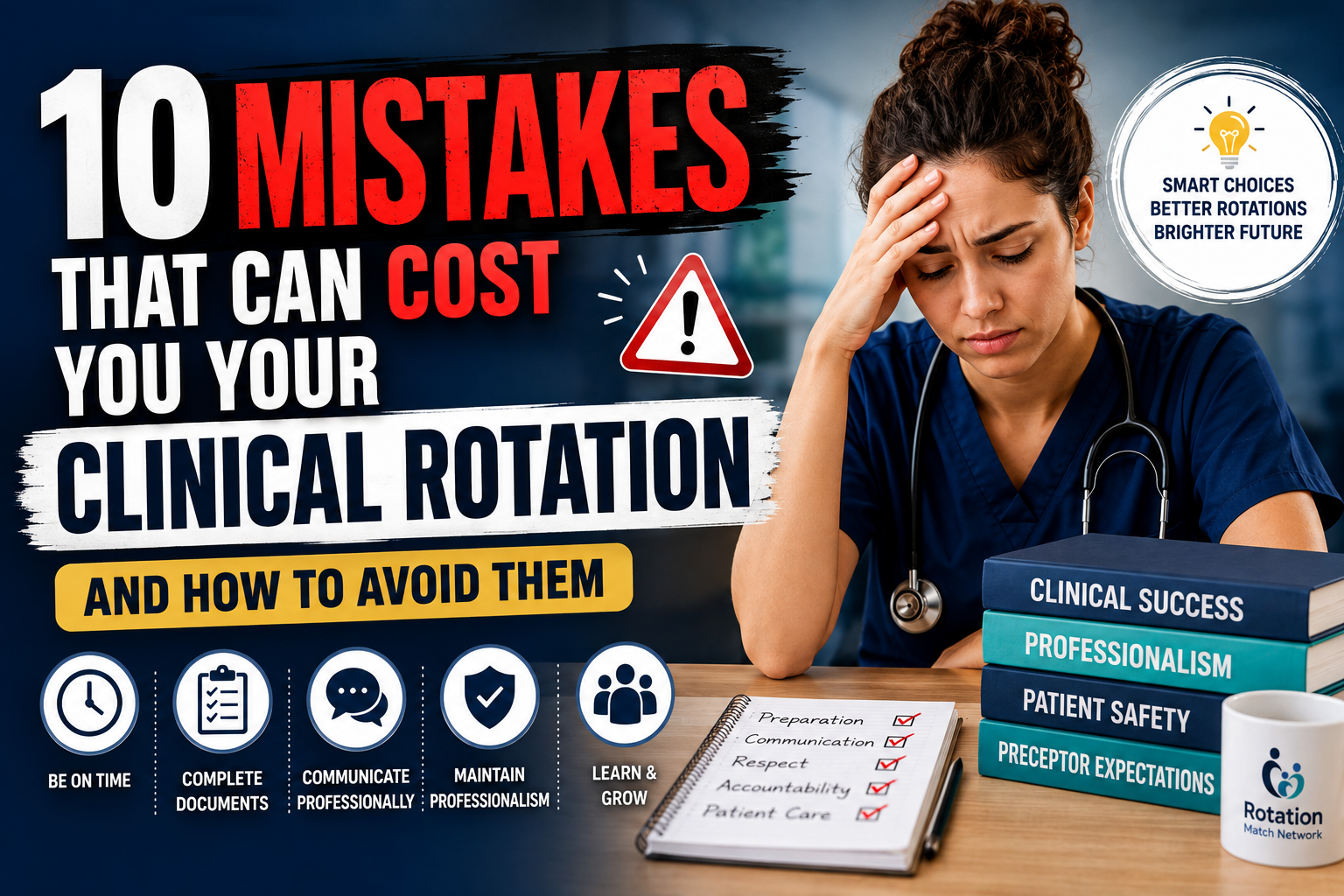
10 Mistakes That Can Cost You Your Clinical Rotation
Clinical rotations are an exciting milestone in every healthcare student's journey. They provide the opportunity to apply classroom knowledge, develop clinical skills, and learn directly from experienced healthcare professionals. However, success during your rotation depends on more than your academic performance.
Many students unknowingly make mistakes that can damage their professional reputation, strain relationships with preceptors, or even result in losing their clinical placement. The good news is that these mistakes are entirely preventable.
Here are ten common mistakes that can put your clinical rotation at risk and how to avoid them.
1. Waiting Until the Last Minute
Procrastinating can create unnecessary stress and limit your options. Starting your search for a preceptor early gives you more opportunities and enough time to complete all required paperwork before your rotation begins.
2. Poor Communication
Clear and respectful communication is essential throughout your clinical experience. Whether you are emailing a preceptor, responding to your school, or asking questions during your rotation, professionalism matters.
Respond promptly, use courteous language, and always communicate clearly.
3. Arriving Late
Punctuality is one of the simplest ways to demonstrate professionalism. Arriving late repeatedly may suggest that you are unreliable or not taking your responsibilities seriously.
Plan your commute in advance and aim to arrive a few minutes early each day.
4. Incomplete Documentation
Missing documents such as immunization records, background checks, CPR certification, or liability insurance can delay or even cancel your clinical placement.
Keep all required documents organized and verify that everything is complete before your rotation begins.
5. Failing to Follow Instructions
Preceptors expect students to listen carefully and follow directions. Ignoring instructions or failing to ask for clarification when needed can affect patient care and your learning experience.
If you are unsure about a task, ask questions instead of making assumptions.
6. Unprofessional Behavior
Professionalism extends beyond wearing scrubs. It includes your attitude, respect for patients, teamwork, confidentiality, and willingness to learn.
Treat every interaction as an opportunity to build your professional reputation.
7. Using Your Phone Inappropriately
Unless instructed otherwise, avoid using your phone for personal reasons during clinical hours. Excessive phone use can appear disrespectful and distract you from patient care.
Stay focused and engaged throughout your shift.
8. Not Accepting Feedback
Constructive feedback is one of the most valuable parts of clinical education. Becoming defensive or ignoring advice limits your growth.
View feedback as an opportunity to improve your skills and confidence.
9. Neglecting Patient Confidentiality
Protecting patient privacy is a fundamental responsibility for every healthcare professional. Never share patient information inappropriately or discuss cases in public settings.
Always follow HIPAA guidelines and your institution's privacy policies.
10. Giving Up Too Easily
Clinical rotations can be challenging, especially when adjusting to a new environment. Every student encounters difficult days, but resilience is part of becoming a successful healthcare professional.
Stay positive, remain open to learning, and seek guidance whenever you need support.
Final Thoughts
Your clinical rotation is more than a graduation requirement. It is your opportunity to develop the habits, professionalism, and confidence that will shape your future career.
By staying organized, communicating effectively, respecting your preceptor, and maintaining a professional attitude, you can make the most of your clinical experience and leave a lasting positive impression.
At Rotation Match Network, we are committed to helping healthcare students connect with qualified preceptors and navigate the clinical placement process with confidence. Every successful rotation begins with preparation, professionalism, and the right support.
Keywords
- Clinical rotation
- Clinical rotations
- Clinical preceptor
- Healthcare students
- Clinical placement
- Clinical education
- Student clinical experience
- Clinical rotation tips
- Preceptor expectations
- Rotation Match Network