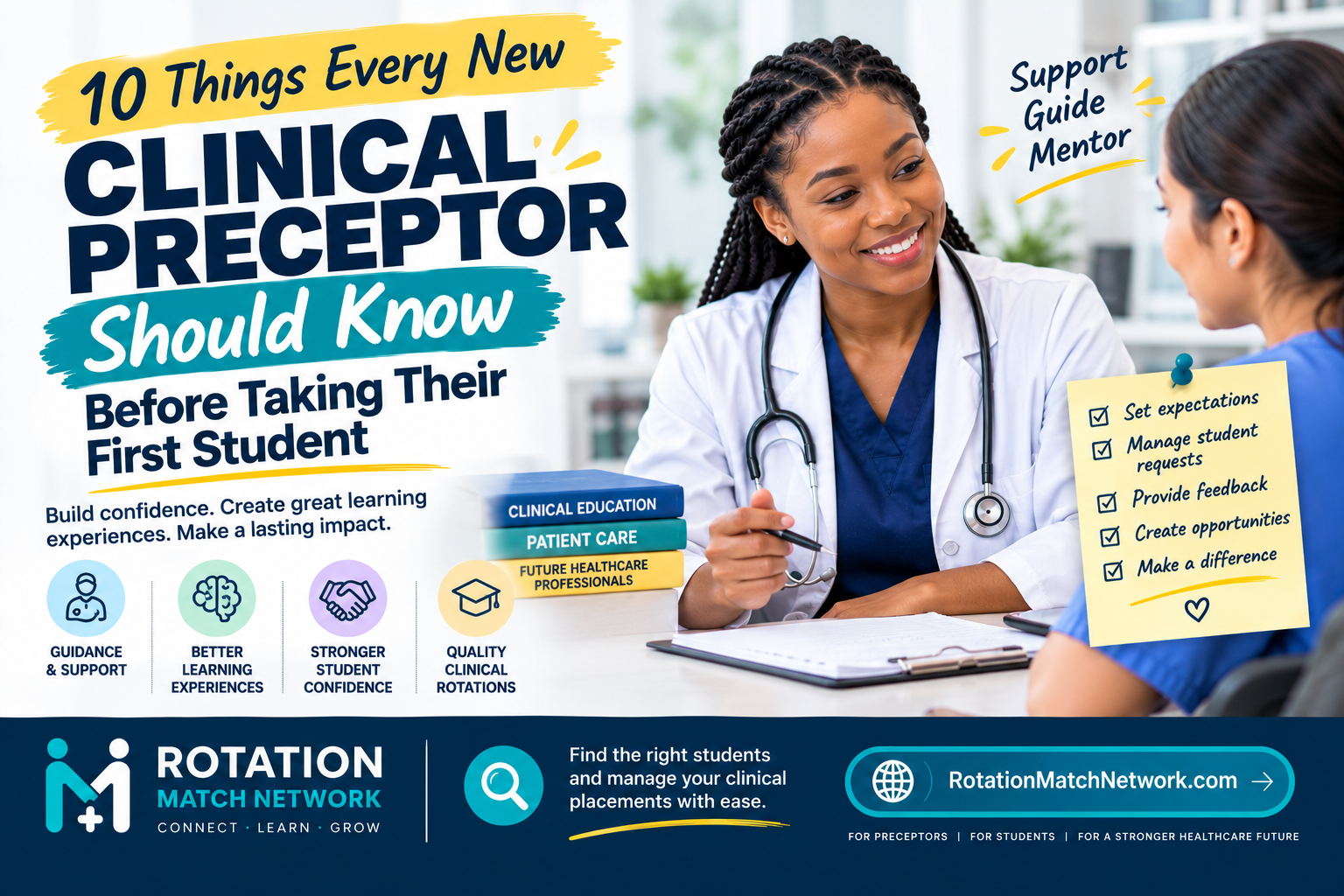
10 Things Every New Clinical Preceptor Should Know Before Taking Their First Student
Becoming a clinical preceptor is more than allowing a student to spend time at your practice.
You are helping a future healthcare professional move from the classroom into real clinical practice.
For a new preceptor, that responsibility can feel exciting and a little overwhelming. You may wonder what students expect, how much supervision they need, how to manage your schedule, or how to make sure the rotation is actually valuable.
The good news is that you do not need to have everything figured out before taking your first student.
You need a clear plan, good communication, patience, and a genuine willingness to teach.
Here are 10 important things every new clinical preceptor should know before taking their first student.
1. Your First Student Does Not Expect You to Be Perfect
One of the biggest misconceptions about becoming a clinical preceptor is that you need to be an expert teacher before you begin.
You do not.
You already have something valuable that students need: real clinical experience.
You know what it is like to work with patients, make clinical decisions, communicate with healthcare teams, manage unexpected situations, and apply knowledge in practice.
Your role is to help students understand how those experiences translate into their own professional development.
You will also learn as you go.
Your first student may teach you things about mentorship, communication, and teaching that you never expected.
2. Understand What the Student Needs to Complete
Before accepting a student, understand what their program requires.
Ask about:
• Required clinical hours
• Specialty requirements
• Patient population requirements
• Required competencies
• Rotation dates
• Documentation requirements
• School expectations
• Evaluation requirements
This is important because not every student needs the same clinical experience.
A student may be looking for a particular specialty, patient population, or number of clinical hours.
Understanding their requirements before accepting the request can help prevent problems later.
3. Set Your Expectations From Day One
Students should know what you expect from them.
Before the rotation begins, discuss things such as:
• Arrival time
• Attendance
• Dress code
• Professional behavior
• Communication
• Preparation
• Patient interaction
• Documentation
• Appropriate use of phones and technology
• How questions should be handled
Clear expectations make the rotation easier for everyone.
You do not need a complicated rulebook.
A simple conversation before the first clinical day can prevent many misunderstandings.
4. Your Student May Be Nervous
Remember what it feels like to be new.
A student may walk into your practice knowing the theory but feeling nervous about applying it to real patients.
They may be afraid to ask questions because they do not want to appear unprepared.
Create an environment where appropriate questions are welcome.
You can encourage this by saying something as simple as:
“If you are unsure about something, ask. This is a learning environment.”
That one sentence can make a student feel much more comfortable.
5. Let the Student Learn, But Know When to Step In
A clinical student needs opportunities to participate.
Simply allowing them to observe every patient encounter may not give them the experience they need.
Where appropriate and within their level of training, allow students to participate in activities such as:
• Patient history taking
• Physical assessments
• Patient education
• Clinical discussions
• Documentation
• Case presentations
• Other approved clinical activities
At the same time, supervision matters.
Students should not be expected to perform activities beyond their training, authorization, or program requirements.
A good preceptor knows when to encourage independence and when to provide closer supervision.
6. Feedback Is One of Your Most Important Tools
Students cannot improve if they do not know what they are doing well and what they need to change.
Do not wait until the final week to give feedback.
Give small pieces of constructive feedback throughout the rotation.
For example:
“Your patient interview was thorough. Next time, try to organize your questions a little more so the conversation flows naturally.”
Specific feedback is much more useful than simply saying:
“Good job.”
You do not have to criticize everything.
Recognize progress as well.
When students know what they are doing right, they are more likely to build confidence.
7. Your Clinical Schedule Matters
You are busy.
Your student knows that.
However, accepting a student without considering whether you actually have the time and clinical exposure to support them can create frustration for both sides.
Before accepting a request, consider:
Do I have enough availability?
Can I provide the required clinical hours?
Will the student have meaningful patient exposure?
Can I realistically answer questions and provide feedback?
Do the requested dates work with my schedule?
Being honest about your availability is better than accepting a student and discovering later that your schedule cannot accommodate them.
8. Communication Should Start Before the First Clinical Day
Do not wait until the student arrives at your practice before discussing the basics.
Confirm important information ahead of time.
Let the student know:
• Where to report
• When to arrive
• What to wear
• What to bring
• What documents are required
• What they should review beforehand
• How you prefer to communicate
Good communication before the rotation begins can make the first day much smoother.
It also establishes a professional relationship before you meet in person.
9. Keep Your Preceptor Profile and Availability Updated
If you are accepting students, your profile should make it easy for them to understand who you are and what you offer.
Include information such as:
• Your credentials
• Specialty
• Clinical setting
• Location
• Types of students you accept
• Available dates
• Clinical experience
• Teaching approach
• Relevant requirements
An accurate profile helps students determine whether your opportunity is a good match before sending a request.
This is especially useful when you are receiving requests from multiple students.
10. Use a System That Makes Student Requests Easier
Managing students through scattered emails, text messages, spreadsheets, and documents can quickly become difficult.
This is especially true when you begin receiving multiple requests.
A clinical placement platform can help keep important information in one place.
Rotation Match Network is designed to connect students and preceptors while organizing the clinical placement process. Preceptors can create a professional profile, showcase their specialty and availability, review student requests, and manage placement communication and documentation through the platform.
Instead of constantly answering the same questions about your specialty, availability, and rotation requirements, your profile can provide students with important information before they submit a request.
Visit RotationMatchNetwork.com to become a preceptor
What Makes a Good Clinical Preceptor?
You do not need to be the loudest person in the room or have a complicated teaching style.
A good clinical preceptor is someone who:
• Communicates clearly
• Treats students with respect
• Creates appropriate learning opportunities
• Provides constructive feedback
• Sets realistic expectations
• Encourages questions
• Models professionalism
• Understands the student's learning objectives
• Knows when to supervise closely
• Gives students room to grow
Your student will probably forget some of the individual cases they saw during the rotation.
But they may remember how you made them feel when they were learning something difficult.
Before You Accept Your First Student, Ask Yourself These Questions
Before saying yes to a student request, consider:
1. Do the student's clinical requirements match what I can provide?
2. Are the requested dates compatible with my schedule?
3. Can I provide meaningful clinical exposure?
4. Am I comfortable mentoring a student at this level?
5. Do I understand what the student's school expects?
6. Are my credentials and required documents current?
7. Have I clearly communicated my expectations?
8. Do I have a plan for giving feedback?
9. Do I have a reliable way to communicate with the student?
10. Am I prepared to make this a learning experience rather than simply having a student follow me around?
If you can answer these questions confidently, you are already thinking like a preceptor.
Your First Student Is Also Your First Teaching Experience
You do not have to know exactly how everything will go.
Your first student will have different strengths, questions, and learning needs from the next one.
The important thing is to remain open, communicate clearly, and treat the rotation as a professional learning experience for both of you.
Clinical preceptors play an important role in helping students develop the confidence and practical skills they need beyond the classroom.
And if you are ready to take that step, having the right system can make the process much easier.
Ready to Become a Clinical Preceptor?
If you are a healthcare professional considering taking your first student, Rotation Match Network can help you get started.
You can create a preceptor profile, provide your specialty and availability, and connect with students searching for clinical placement opportunities. RMN is built to streamline the placement process so preceptors can spend less time managing requests and more time focusing on mentorship.
Create your preceptor profile on RotationMatchNetwork.com
Your clinical experience has value.
Your knowledge has value.
And for the right student, your mentorship could be the experience that helps turn classroom knowledge into real clinical confidence.
Your first student is not just another rotation request. It is an opportunity to help shape the next healthcare professional.