Introduction
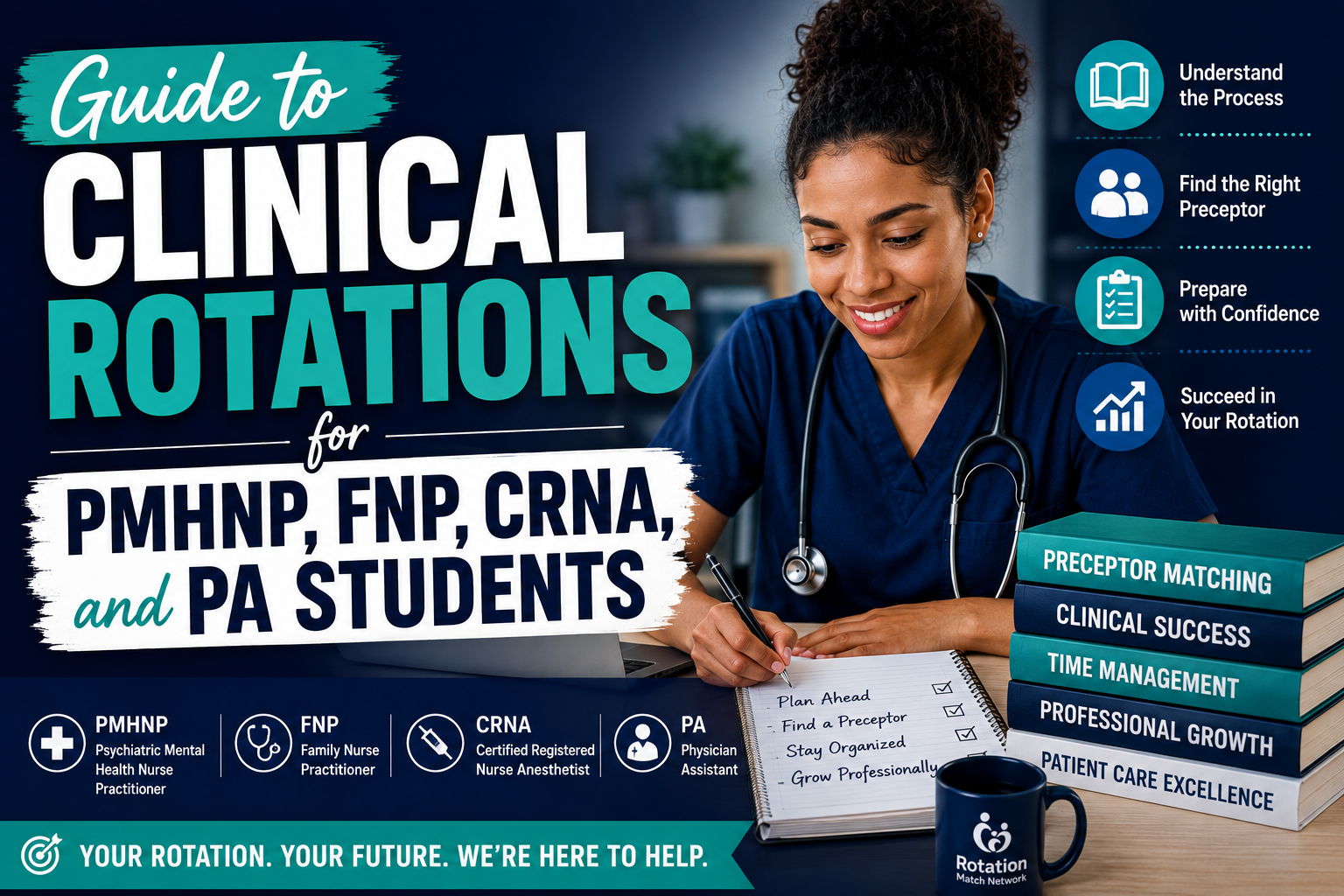
Clinical rotations are one of the most critical—and often most stressful—parts of becoming a healthcare provider. Whether you are a PMHNP, FNP, CRNA, or PA student, securing a qualified preceptor can determine how smoothly you progress through your program.
At the same time, experienced clinicians are in a powerful position to shape the future of healthcare by mentoring the next generation.
This guide breaks down everything you need to know about clinical rotations—how to secure them as a student and how to benefit as a preceptor—using modern solutions like RotationMatch Network.
Why Clinical Rotations Are So Important
Clinical rotations bridge the gap between theory and real-world practice.
During rotations, students:
- Apply classroom knowledge to patient care
- Develop clinical decision-making skills
- Gain hands-on experience in real healthcare settings
- Build confidence and professional identity
For specialties like psychiatry, family medicine, anesthesia, and acute care, this hands-on training is essential.
The Growing Challenge: Finding a Preceptor
Across the U.S., students are facing increasing difficulty finding clinical placements.
Why?
- More NP, PA, and CRNA programs than ever before
- Limited number of available preceptors
- Busy provider schedules
- Administrative and credentialing requirements
This shortage affects:
- PMHNP students (especially high demand in mental health)
- FNP students (broad scope, high competition)
- CRNA students (highly specialized clinical requirements)
- PA students (multiple rotations across specialties)
Clinical Rotations by Specialty
PMHNP Clinical Rotations
Psychiatric Mental Health Nurse Practitioner students require experience in:
- Medication management
- Therapy modalities
- Psychiatric evaluations
- Substance use treatment
High demand + limited psychiatric providers = competitive placements
FNP Clinical Rotations
Family Nurse Practitioner students rotate through:
- Primary care
- Chronic disease management
- Preventive health
- Women’s health and pediatrics
Versatility is an advantage, but competition is still high
CRNA Clinical Rotations
CRNA students need:
- Anesthesia administration
- Airway management
- Surgical case exposure
- Critical care experience
Highly structured and competitive placements
PA Clinical Rotations
Physician Assistant students rotate through:
- Internal medicine
- Surgery
- Emergency medicine
- Psychiatry
- Pediatrics
Multiple rotations increase the challenge of securing placements
How Students Can Secure Clinical Rotations Faster
1. Start Early (3–6 Months Ahead)
Waiting too long is one of the biggest mistakes students make.
2. Use a Preceptor Matching Platform
Platforms like RotationMatch Network simplify the process by connecting students with available, verified preceptors.
3. Be Flexible
Students who are open to:
- Traveling
- Adjusting schedules
- Exploring different settings
often secure placements faster.
4. Prepare Your Documents
Have everything ready:
- Resume
- School requirements
- Immunizations
- Malpractice insurance
5. Stay Organized
Track:
- Outreach efforts
- Responses
- Application status
How Preceptors Benefit from Teaching Students
Clinical education is not just about students—preceptors gain significant value as well.
1. Additional Income Opportunities
Many preceptors receive:
- Honorariums
- Stipends
- Compensation through placement platforms
2. Professional Growth
Teaching enhances:
- Leadership skills
- Clinical knowledge
- Communication abilities
3. Giving Back to the Profession
Preceptors help train competent, confident future providers.
4. Expanding Your Network
Working with students can lead to long-term professional relationships.
Why Preceptors Are More Important Than Ever
The healthcare system depends on preceptors to:
- Train future providers
- Address workforce shortages
- Maintain high standards of care
Without preceptors, students cannot graduate—and the provider shortage worsens.
How RotationMatch Network Bridges the Gap
RotationMatch Network is designed to solve one of the biggest challenges in healthcare education: connecting students with preceptors efficiently.
For Students:
- Search by specialty and location
- Request rotations بسهولة
- Get matched faster
- Track application progress
For Preceptors:
- Set your availability
- Accept qualified students
- Earn additional income
- Reduce administrative burden
The Future of Clinical Rotations
Technology is transforming how clinical placements are secured.
Instead of:
- Endless emails
- Cold calls
- Uncertainty
Students and preceptors can now connect through structured, efficient platforms.
RotationMatch Network is at the forefront of this transformation.
Final Thoughts
Whether you are a PMHNP, FNP, CRNA, or PA student, finding a preceptor does not have to be overwhelming.
And if you are a preceptor, your role is more valuable now than ever.
By leveraging modern tools like RotationMatch Network, both students and providers can:
- Save time
- Reduce stress
- Improve outcomes
- Strengthen the future of healthcare