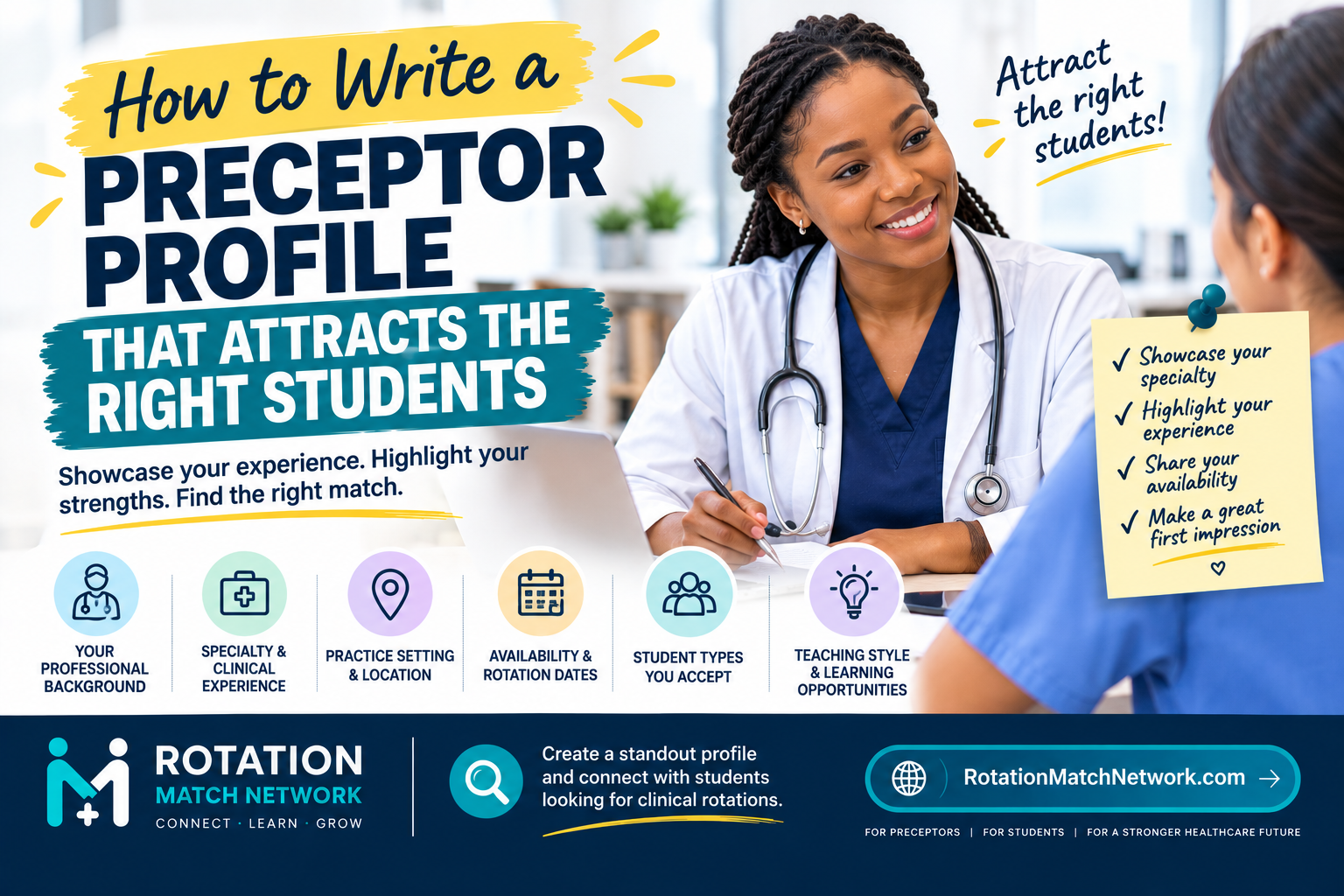
How to Write a Preceptor Profile That Attracts the Right Students
Creating a preceptor profile is more than listing your credentials and waiting for students to find you.
Your profile is often the first impression a student gets of you. Before sending a clinical rotation request, students want to know who you are, what you specialize in, where you practice, when you are available, and most importantly, whether you are the right fit for their clinical goals.
A clear and informative profile can help students quickly understand what you offer and make it easier for the right students to find you.
So, how do you write a preceptor profile that attracts the right students?
Start by giving students the information they actually need to make a decision.
What Is a Clinical Preceptor Profile?
A clinical preceptor profile is a professional introduction that tells students about your clinical background, specialty, practice setting, availability, experience, and what students can expect during a rotation with you.
Think of it as your professional introduction to students who are looking for a clinical placement.
A strong profile should answer questions such as:
• Who are you?
• What is your specialty?
• Where do you practice?
• What type of students do you work with?
• What clinical experiences can students gain?
• When are you available?
• What are your expectations?
• What makes your clinical experience valuable to students?
The clearer your profile is, the easier it becomes for students to determine whether they are a good match.
1. Start With a Strong Professional Introduction
The first few lines of your profile matter.
Introduce yourself clearly and professionally.
Include your:
• Professional role
• Specialty
• Relevant credentials
• Years of clinical experience
• Practice area
• Main areas of expertise
For example, instead of writing:
“I am a nurse practitioner with several years of experience.”
You could write:
“I am a board certified Family Nurse Practitioner with extensive experience in primary care, chronic disease management, preventive health, and patient education. I enjoy helping students develop practical clinical skills and confidence in patient care.”
The second version immediately tells a student what you do and what they can expect from you.
2. Clearly State Your Specialty
Students are often searching for preceptors based on specialty.
If your profile simply says that you are a healthcare professional, students may not know whether you meet their program requirements.
Be specific.
For example:
Family Nurse Practitioner
Psychiatric Mental Health Nurse Practitioner
Physician Assistant
Certified Registered Nurse Anesthetist
Then explain your areas of clinical practice.
If you work in multiple areas, mention the ones that are most relevant to students.
This helps students determine whether your experience aligns with their required clinical rotation.
3. Explain Your Clinical Experience
Students want to know what they can learn from you.
Instead of simply listing your job title, explain the type of clinical experience you bring.
You might mention experience with:
• Primary care
• Mental health
• Pediatrics
• Women's health
• Chronic disease management
• Acute care
• Preventive care
• Patient education
• Health assessments
• Diagnosis and treatment planning
Focus on experiences that students may encounter during their rotation.
Your goal is not to write your entire professional history.
Your goal is to show students why your clinical experience is relevant to their education.
4. Tell Students What They Can Learn
One of the strongest parts of a preceptor profile is explaining the learning opportunities you can provide.
Ask yourself:
What can a student actually gain from completing a rotation with me?
For example:
“Students will have opportunities to strengthen patient assessment, clinical reasoning, documentation, patient education, and communication skills while gaining exposure to common primary care conditions.”
This is more useful to a student than simply saying:
“I have 10 years of experience.”
Your experience establishes credibility.
Your learning opportunities show students why they should consider your rotation.
5. Be Clear About the Types of Students You Accept
Not every preceptor is the right fit for every student.
If you typically work with particular programs or student types, make that clear.
For example, you may accept:
• FNP students
• PMHNP students
• Nursing students
• PA students
• CRNA students
You may also have preferences based on student level or clinical experience.
Being specific can actually help you attract better matches.
The goal is not to attract every student.
The goal is to attract the right students.
6. Highlight Your Practice Setting
Your practice environment can be an important part of a student's decision.
Explain where students will complete their clinical experience.
For example:
• Primary care clinic
• Hospital
• Mental health practice
• Urgent care
• Community health center
• Specialty clinic
• Long term care setting
• Outpatient practice
If there is something unique about your setting, mention it.
Students may specifically be looking for a particular type of clinical environment because of their program requirements or career goals.
7. Include Your Availability
A student may love your profile but immediately move on if they cannot determine whether your availability matches their rotation dates.
Make your availability as clear as possible.
Include:
• Available months
• Preferred days
• Number of students you can accommodate
• Typical clinical hours
• Rotation duration, where applicable
Keep your availability updated.
If you are no longer accepting students for a particular period, update your profile rather than leaving old information visible.
Accurate availability saves both you and students time.
8. Explain Your Teaching Style
Students do not only choose preceptors based on credentials.
They also want to know what it will feel like to learn from you.
Are you:
Hands on?
Discussion based?
Focused on clinical reasoning?
Structured and organized?
Encouraging and mentorship focused?
Tell students how you approach teaching.
For example:
“My teaching approach is practical and interactive. I encourage students to ask questions, participate appropriately in patient care, explain their clinical reasoning, and learn from feedback.”
This gives students an idea of what to expect before they submit a request.
9. Explain Your Expectations
A good preceptor profile should also make your expectations clear.
Students appreciate knowing what you expect before the rotation begins.
You might mention expectations around:
• Professionalism
• Attendance
• Communication
• Preparation
• Dress code
• Patient interaction
• Documentation
• Participation
• Asking questions
Clear expectations can prevent misunderstandings later.
It also helps students decide whether your approach is compatible with their learning style.
10. Show What Makes You Different
There may be several preceptors offering similar specialties.
Why should a student consider you?
Think about what makes your clinical experience valuable.
Maybe you have extensive experience in a particular patient population.
Maybe you enjoy mentoring new healthcare professionals.
Maybe your practice exposes students to a wide range of conditions.
Maybe you have a strong interest in helping students develop clinical confidence.
Maybe you provide regular feedback and encourage students to become more independent in their clinical reasoning.
Do not be afraid to communicate your strengths.
Just keep them relevant to the student's learning experience.
11. Use Clear and Student Friendly Language
Your preceptor profile does not need to sound like a formal academic paper.
Students want information they can understand quickly.
Avoid filling your profile with unnecessary technical language or long paragraphs.
Instead of:
“Possesses extensive interdisciplinary competencies across diverse clinical domains.”
Say:
“I have experience working with patients across a range of conditions and enjoy helping students develop practical clinical skills.”
Simple language often communicates your value more effectively.
12. Keep Your Profile Professional
Friendly does not mean unprofessional.
Your profile should still represent you as a healthcare professional.
Check your:
• Grammar
• Spelling
• Credentials
• Contact information
• Specialty
• Practice information
• Availability
Avoid unnecessary personal information.
Students need to understand your professional experience and clinical opportunities, not your entire personal history.
13. Add Relevant Credentials and Qualifications
Your credentials help students determine whether you meet their program requirements.
Depending on your profession, you may include relevant:
• Degrees
• Licenses
• Board certifications
• Specialty certifications
• Professional memberships
• Clinical qualifications
Make sure everything is accurate and current.
If a credential has an expiration date, keep your documentation updated where required.
14. Use the Information Students Are Searching For
A good preceptor profile should be easy for students to understand and easy to find when they are searching for a clinical placement.
Think about the terms students may use:
“FNP preceptor near me”
“PMHNP clinical preceptor”
“Family nurse practitioner preceptor”
“Clinical preceptor for nursing students”
“Clinical rotation preceptor”
“Preceptor for PA students”
If relevant, clearly state your specialty, student type, location, and clinical setting.
This does not mean stuffing your profile with keywords.
It simply means using accurate professional terms that describe what you actually offer.
15. Keep Your Profile Updated
An outdated profile can create unnecessary problems.
Imagine a student contacts you because your profile says you are available in October, only to discover that you filled those dates months ago.
Keeping your profile updated helps prevent this.
Review your profile regularly and update:
• Availability
• Credentials
• Practice location
• Specialty
• Student types accepted
• Clinical opportunities
• Requirements
An accurate profile creates a better experience for everyone.
What Should a Clinical Preceptor Profile Include?
Before publishing your profile, make sure you have covered the basics.
Preceptor Profile Checklist
☐ Professional title and credentials
☐ Specialty
☐ Clinical experience
☐ Practice setting
☐ Location
☐ Types of students accepted
☐ Available dates
☐ Typical schedule
☐ Learning opportunities
☐ Teaching style
☐ Student expectations
☐ Required documents
☐ Relevant certifications
☐ Updated professional information
The more useful information students have upfront, the easier it becomes for them to decide whether your rotation is right for them.
Example of a Strong Preceptor Profile
Here is an example of how all these elements can come together:
“I am a board certified Family Nurse Practitioner with several years of experience in primary care. My clinical practice focuses on preventive care, chronic disease management, health assessments, and patient education.
I enjoy mentoring students and helping them connect classroom knowledge with real patient care. During rotations, students can expect opportunities to participate appropriately in patient assessments, develop clinical reasoning skills, practice professional communication, and receive constructive feedback.
I currently accept FNP students and welcome learners who are prepared, curious, professional, and willing to ask questions. My available rotation dates and clinical requirements are listed in my profile.”
Notice what this profile does.
It tells the student who the preceptor is, what they specialize in, what they offer, who they accept, and what students can expect.
That is what a strong profile should accomplish.
How Rotation Match Network Helps Preceptors Connect With the Right Students
Creating a strong profile is only the first step.
You also need a place where students actively searching for clinical rotations can find you.
Rotation Match Network helps connect healthcare students with preceptors based on factors such as specialty, location, availability, and clinical placement needs.
Preceptors can create profiles that showcase their professional background, clinical specialty, availability, and relevant information for students. They can also manage student requests and communicate through the platform.
This means your profile does more than introduce you.
It helps students determine whether your clinical opportunity is the right match for their needs.
If you are a healthcare professional interested in precepting, visit RotationMatchNetwork.com to create your profile and connect with students looking for clinical opportunities.
The Goal Is the Right Match, Not the Most Requests
It can be tempting to think that a successful preceptor profile is one that attracts as many students as possible.
But that is not necessarily the goal.
The best profile attracts students who are actually a good fit for your specialty, clinical environment, availability, and teaching approach.
When students understand what you offer before submitting a request, both sides have a better chance of starting the rotation with realistic expectations.
A well written profile can save time, reduce unnecessary questions, improve communication, and help create a better clinical learning experience.
Ready to Connect With the Right Students?
Your experience can make a difference in the next generation of healthcare professionals.
Create a clear, informative preceptor profile, keep your availability updated, and give students a reason to understand why learning with you could be valuable.
Then make yourself visible to students who are actively looking for clinical opportunities.
Visit RotationMatchNetwork.com to create your preceptor profile and start connecting with students.
Your experience matters. Your mentorship matters. The right student is looking for it.