Introduction
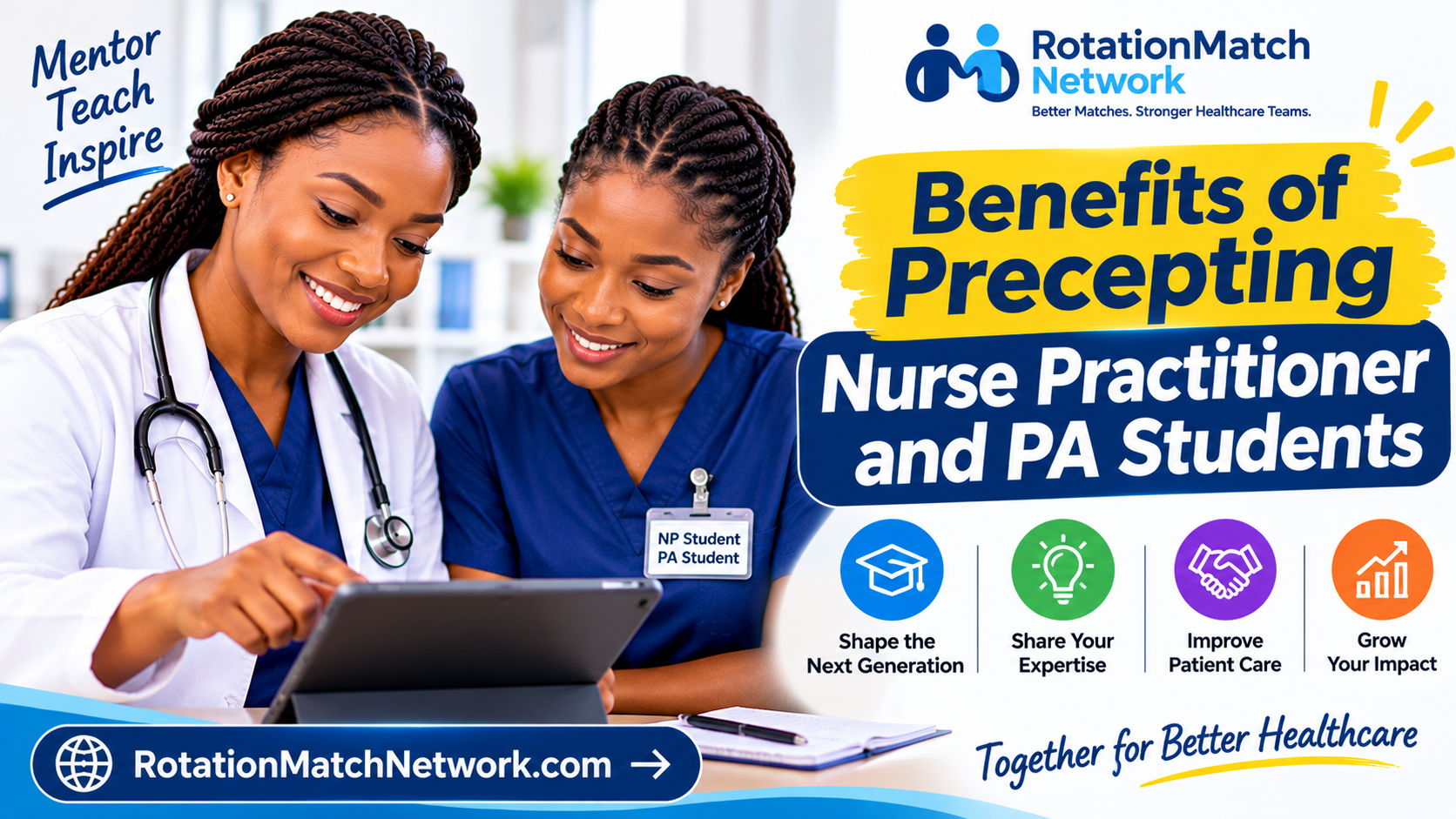
Precepting nurse practitioner (NP) and physician assistant (PA) students can bring numerous benefits to healthcare professionals. These benefits extend beyond simply teaching students; they encompass opportunities for personal and professional growth, the chance to contribute to the development of skilled practitioners, and the satisfaction of shaping future healthcare delivery. Understanding the multifaceted rewards of being a preceptor can help motivate healthcare professionals to embrace this important role in education.
Enhancing Your Teaching Skills
Precepting allows experienced clinicians to refine their teaching abilities. As a preceptor, you are tasked with explaining complex concepts clearly and effectively, evaluating student performance, and providing constructive feedback that encourages growth and learning. This responsibility helps to enhance your communication and teaching skills, making you a more effective educator overall.
Consider incorporating the following techniques to improve your teaching methodology:
- Use case-based learning to stimulate critical thinking and application of knowledge.
- Regularly assess students' understanding and adjust your teaching strategies based on their feedback and performance.
- Encourage students to ask questions and facilitate discussions to deepen understanding.
- Utilize various teaching tools, such as multimedia presentations, interactive sessions, and hands-on demonstrations.
By actively engaging with your students and employing diverse teaching methods, you can enhance their learning experience while also sharpening your skills as a mentor.
Fostering Professional Development
Engaging with NP and PA students can offer numerous opportunities for professional development. As a preceptor, you will often find yourself staying updated with new procedures, guidelines, and technologies through your interactions with students who are being taught the latest in medical education. This mentorship can provide invaluable insights into advancements in the field, which can, in turn, benefit your own practice.
To maximize your continued professional development while precepting, consider the following practices:
- Stay abreast of current literature and trends in your specialty to share relevant information with students.
- Attend workshops or seminars related to teaching methodologies and healthcare advancements.
- Encourage students to present new findings or techniques during rotations, fostering an exchange of knowledge.
Such practices not only enhance your skills but also create a dynamic learning environment that benefits both you and your students.
Personal Fulfillment and Satisfaction
Many preceptors find that mentoring students brings a profound sense of personal satisfaction. Helping students navigate their career paths and contribute to their education can be incredibly rewarding. There is a unique fulfillment in witnessing a student's growth and recognizing their eagerness to learn—these moments can validate your role as an educator.
To enhance your personal connection to this role, consider implementing some self-reflective practices:
- Set aside time to celebrate your students’ accomplishments, no matter how small.
- Maintain a journal documenting your experiences, challenges, and successes as a preceptor.
- Engage in discussions with fellow preceptors to share experiences and strategies that can enrich your practice.
These activities can not only bolster your sense of achievement but also create a deeper bond with the students you mentor.
Networking Opportunities
Precepting also serves as an excellent avenue for networking. Collaborating with students and fellow healthcare professionals can open doors to new connections. These relationships can prove to be beneficial for various aspects of professional growth, shared learning experiences, and future job prospects.
To build effective networks as a preceptor, consider the following steps:
- Participate in local or national professional organizations relevant to your field.
- Attend networking events or conferences where you can meet other preceptors and healthcare professionals.
- Encourage your students to join professional organizations and form connections early in their careers.
- Collaborate on research initiatives or quality improvement projects with students and colleagues.
Through these actions, you not only create a support system for yourself but also model the importance of professional networking for your students.
Shaping Future Healthcare
By precepting NP and PA students, you are playing an integral role in shaping the future of healthcare. Your guidance enables students to develop the competence and confidence they need in clinical practice. By acting as a mentor, you help ensure that graduates are well-prepared to meet the diverse healthcare needs of the populations they will eventually serve.
To make the most of your influence as a preceptor, consider the following components:
- Provide real-world examples to bridge the gap between theory and practice.
- Encourage students to engage with diverse patient populations to build their cultural competence.
- Incorporate ethical discussions and professional behavior modeling into your routine interactions.
- Solicit feedback from students regularly to enhance their learning and adapt their training needs.
By being an active participant in your students' development, you can foster a workforce that is well-equipped for the ever-evolving healthcare landscape.
Contributing to a Positive Work Environment
Creating a culture of learning and mentorship within your workplace can significantly enhance team dynamics and morale. By investing in the education of future practitioners, you establish a collaborative atmosphere where both students and staff members can thrive.
Fostering a positive work environment is essential, and you can take actionable steps to achieve this:
- Organize regular meetings to discuss students’ progress and share insights with your team.
- Encourage teamwork between students and current staff to promote cooperative learning.
- Recognize outstanding accomplishments of students in team meetings, reinforcing a culture of appreciation.
- Build mentorship programs or peer support groups that extend beyond formal precepting.
These steps can help cultivate an atmosphere that values learning and collaboration, ultimately benefiting the entire healthcare team.
Conclusion
Precepting NP and PA students offers experienced clinicians numerous advantages, including enhancements in teaching skills, professional development, personal fulfillment, networking opportunities, and contributing positively to the healthcare system. If you are considering becoming a preceptor, reflect on the profound impact you can have on the future of healthcare while enriching your own professional journey. The experiences you share and the knowledge you impart will help mold the next generation of practitioners who will carry forth the vital work of improving patient care and health outcomes.
Related articles
- How to Become a Clinical Preceptor: A Step-by-Step Overview
- Reasons Healthcare Professionals Choose Precepting
- The Impact of Great Preceptors in Healthcare
Thinking about precepting?
Join RotationMatch Network to receive organized rotation requests from students and manage onboarding documents in one place. Become a preceptor.