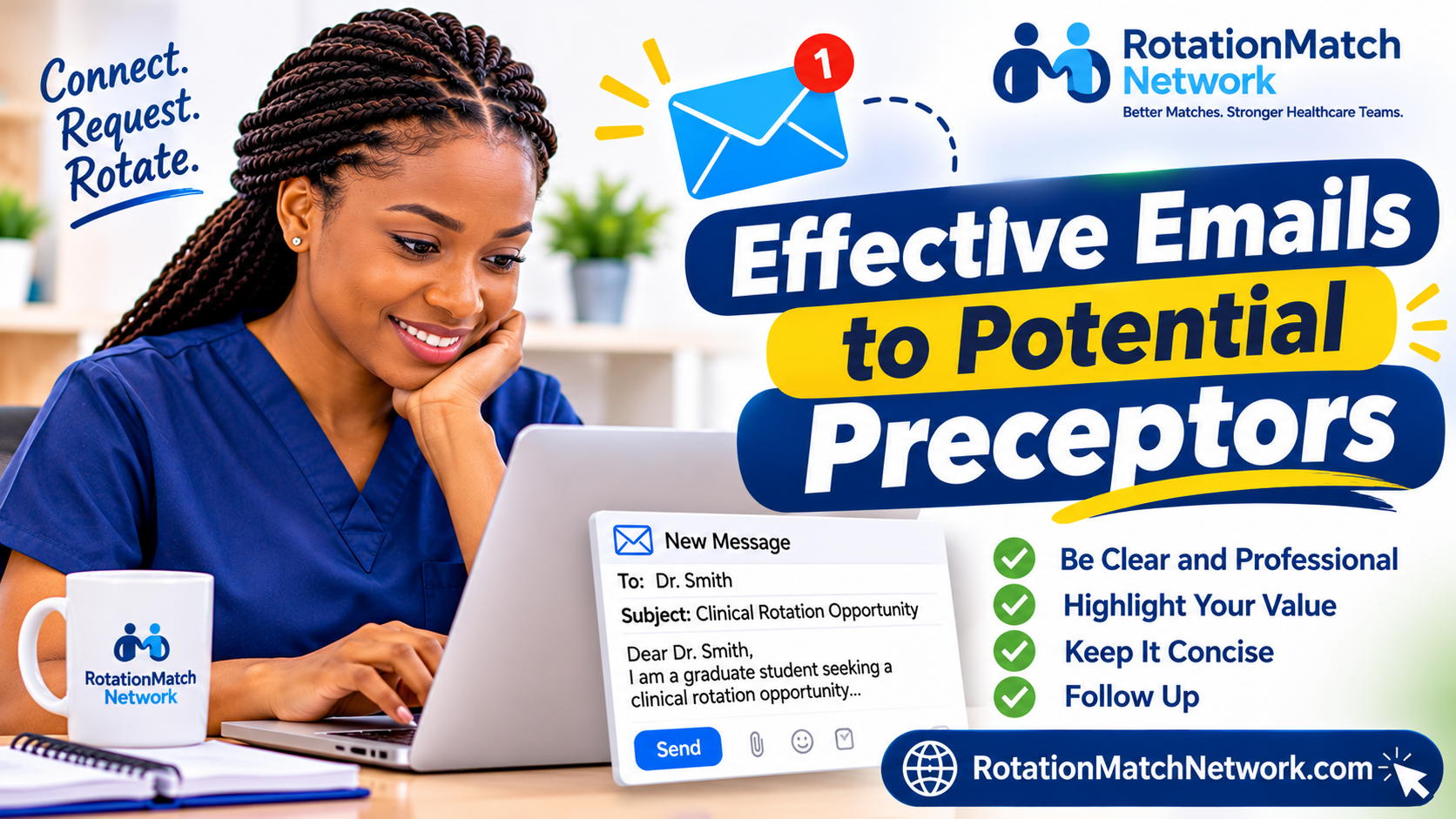
Reaching out to potential clinical preceptors is an important step in securing your rotation placements. A well-crafted email can set a positive tone and provide the preceptor with the information they need to consider your request. Here are key elements to include in your email to ensure clarity, professionalism, and effectiveness.
Subject Line
Your subject line should be straightforward and informative. It should quickly convey the purpose of your email to grab the preceptor's attention immediately. This is often the first impression you will make. For example, you might use: "Rotation Request for [Your Specialty or Program] – [Your Name]." This immediately informs the preceptor of your intent and sets the stage for the rest of your correspondence. Additionally, consider adding key information that might help the preceptor recall your name or program, especially if they receive many similar requests.
Professional Greeting
Begin your email with a polite salutation. Address the preceptor by their title and last name (e.g., "Dear Dr. Smith" or "Hello Ms. Johnson"). This shows respect and professionalism, which are crucial in the educational and healthcare environment. If you are unsure of their preferred title, doing a quick search on their professional background may provide clarity and ensure that you address them correctly. If you have previously met or communicated with the preceptor, you could personalize your greeting with a note such as, "I hope your recent seminar in [specific topic] went well." This small gesture of familiarity can help soften the approach.
Introduction
In your opening paragraph, briefly introduce yourself. Include your name, your program, and your current level of training. For example, "My name is Jane Doe, and I am a second-year Nurse Practitioner student at XYZ University." This gives the preceptor context about who you are. If applicable, you might also want to share how you came across their name—whether through a mentor, research, or a networking event—this builds connection and shows your proactive approach in seeking valuable experiences.
Purpose of the Email
Clearly state the purpose of your email in a concise manner. Specify that you are seeking a clinical rotation and mention the desired dates and specialty area. For instance, you could say: "I am reaching out to inquire about the possibility of completing my clinical rotation in family medicine from June to August 2023." This direct approach helps the preceptor understand the specific request you're making. Maintain clarity by breaking this part down into bullet points if necessary:
- Your desired rotation specialty.
- The timeframe for your rotation.
- Your willingness to discuss specific dates or flexibility regarding scheduling.
This format makes it easier for the preceptor to understand your needs at a glance.
Your Interest in Their Practice
Include a brief statement about why you are interested in their practice. Mention any specific aspects that draw you to their clinical setting. This could be their reputation, approach to patient care, or innovative programs. For example: "I admire your commitment to community health and would be honored to learn in such a dynamic environment." This personal touch shows genuine interest. You could also improve this section by mentioning a specific case study, initiative, or event they were part of that resonated with you, further showcasing the research you have done prior to reaching out.
Qualifications and Skills
Provide a short summary of your qualifications and relevant experiences. Highlight any particular skills or training that make you a good fit for their practice. For instance: "I have completed coursework in advanced health assessment and have hands-on experience through my clinical skills lab. I believe my skills would contribute positively to your team." This lets the preceptor know what you can bring to the rotation. To make your qualifications even more compelling, you could organize this content into distinct points or themes, such as:
- Relevant coursework completed.
- Previous clinical experiences (including volunteer work or shadowing).
- Skills or certifications (like CPR or First Aid).
This structured overview makes it easier for the preceptor to grasp your value rapidly.
Closing with a Call to Action
In your closing paragraph, express your hope to discuss this opportunity further. You might write: "I would appreciate the opportunity to discuss this further and would be happy to provide additional information or meet at your convenience." This invitation opens the door for further communication. It's helpful to propose a few specific times when you're available, which may facilitate quicker scheduling for follow-up communication. Additionally, make sure to thank the preceptor for considering your request, as this adds to the professionalism of your email. Providing a positive tone throughout reinforces your intent and eagerness to collaborate.
Professional Sign-Off
End your email with a professional sign-off such as "Best regards" or "Sincerely," followed by your full name, contact information, and any relevant affiliations (like your university). This reinforces your professional demeanor. Including your contact information ensures they have multiple ways to reach you and shows that you are serious about your communication. Consider including:
- Your phone number.
- Your email address, if different from the one you are sending the email from.
- Your LinkedIn profile or professional web page, if applicable, for further information.
This thorough sign-off maintains clarity and professionalism, allowing the preceptor to easily follow up.
Additional Tips for Effective Communication
While structuring your email is important, here are some additional tips for effective communication:
- Proofread your email: Errors in spelling or grammar can reduce your credibility. Read your email aloud to catch any mistakes.
- Be concise: Keep your email brief and to the point. A clear, concise message is more likely to be read and responded to positively.
- Follow up: If you don't hear back within a week or so, it's appropriate to send a polite follow-up email reiterating your interest.
- Be patient: Preceptors often have busy schedules. Allow them time to consider your request and respond accordingly.
These tips can enhance your chances of a favorable response and cultivate a professional relationship with potential mentors.
Conclusion
Writing to potential preceptors may feel daunting, but a well-structured email can make a significant difference. By including these elements, you can create a compelling message that expresses your enthusiasm and qualifications. Properly introducing yourself and articulating your interests allows you to stand out amongst other candidates. If you're ready to start reaching out to potential preceptors, consider checking out how to connect with them on RotationMatch Network. With the right approach, you can successfully navigate the dynamics of clinical placements and build beneficial professional relationships.
Related articles
- How to Write a Message That Gets a Preceptor to Respond
- Essentials for Your Clinical Rotation Request
- Crafting a Preceptor Profile to Attract Students
Looking for a clinical preceptor?
RotationMatch Network helps NP, PA and CRNA students find preceptors and manage rotation paperwork in one place. Create your student account or browse preceptors.